



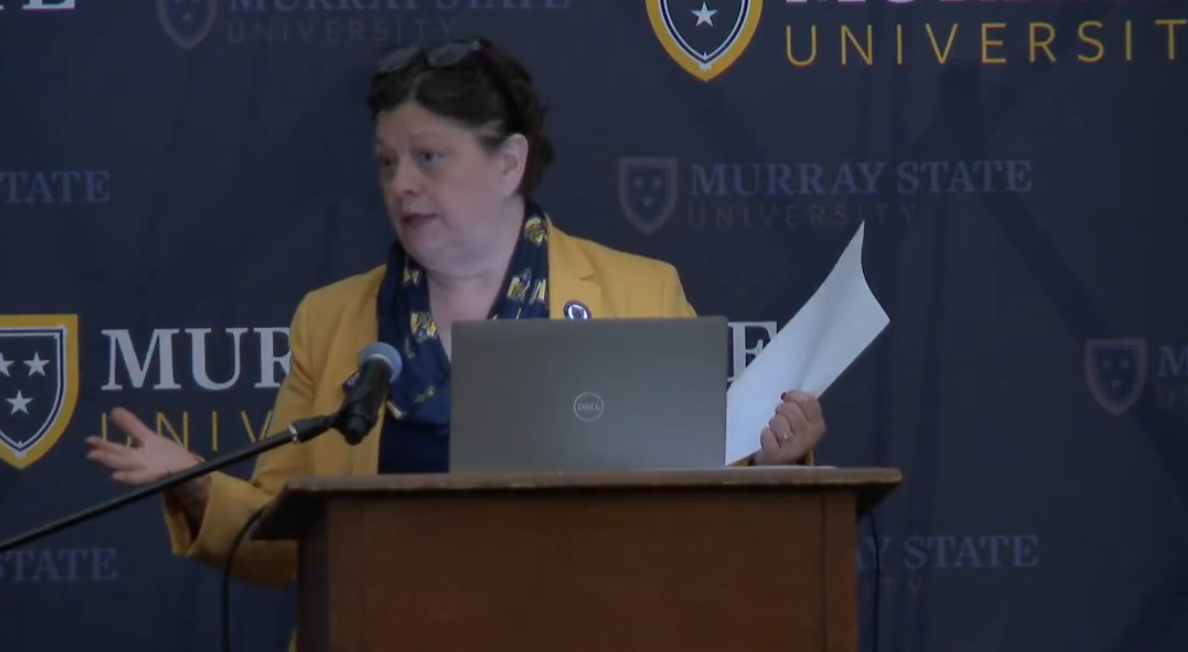










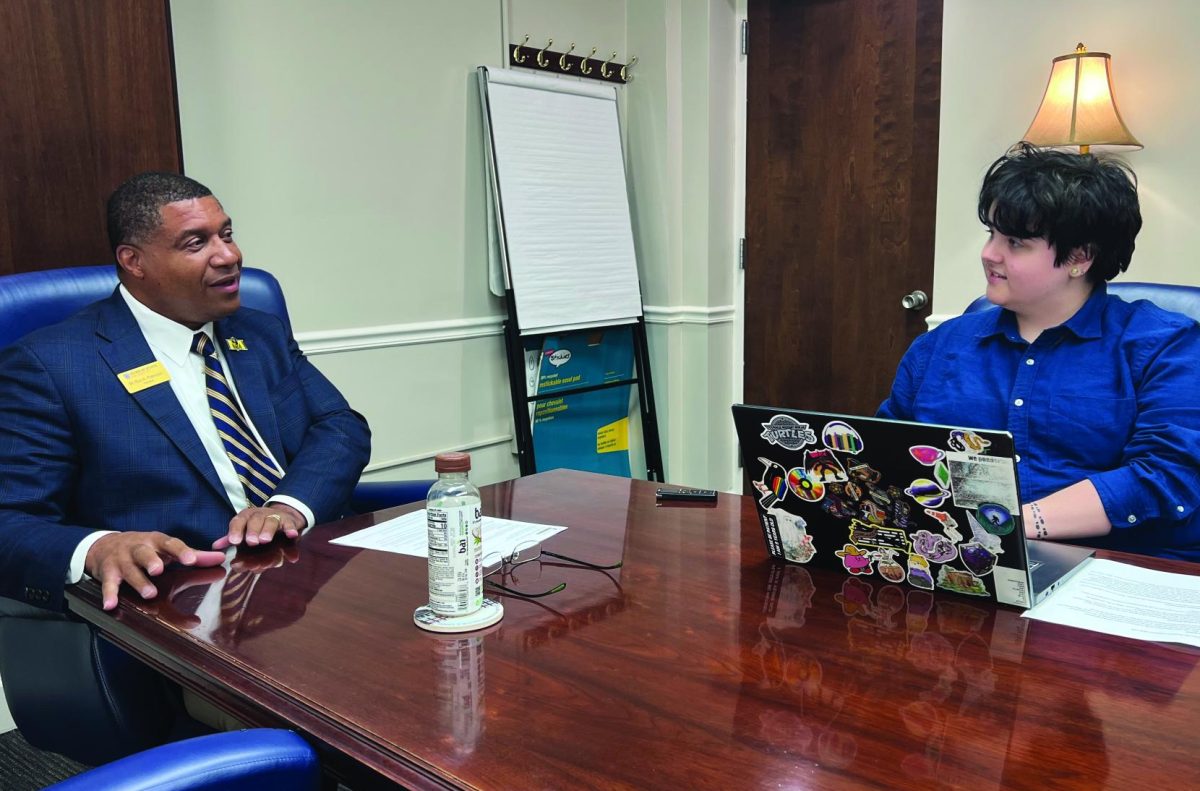
















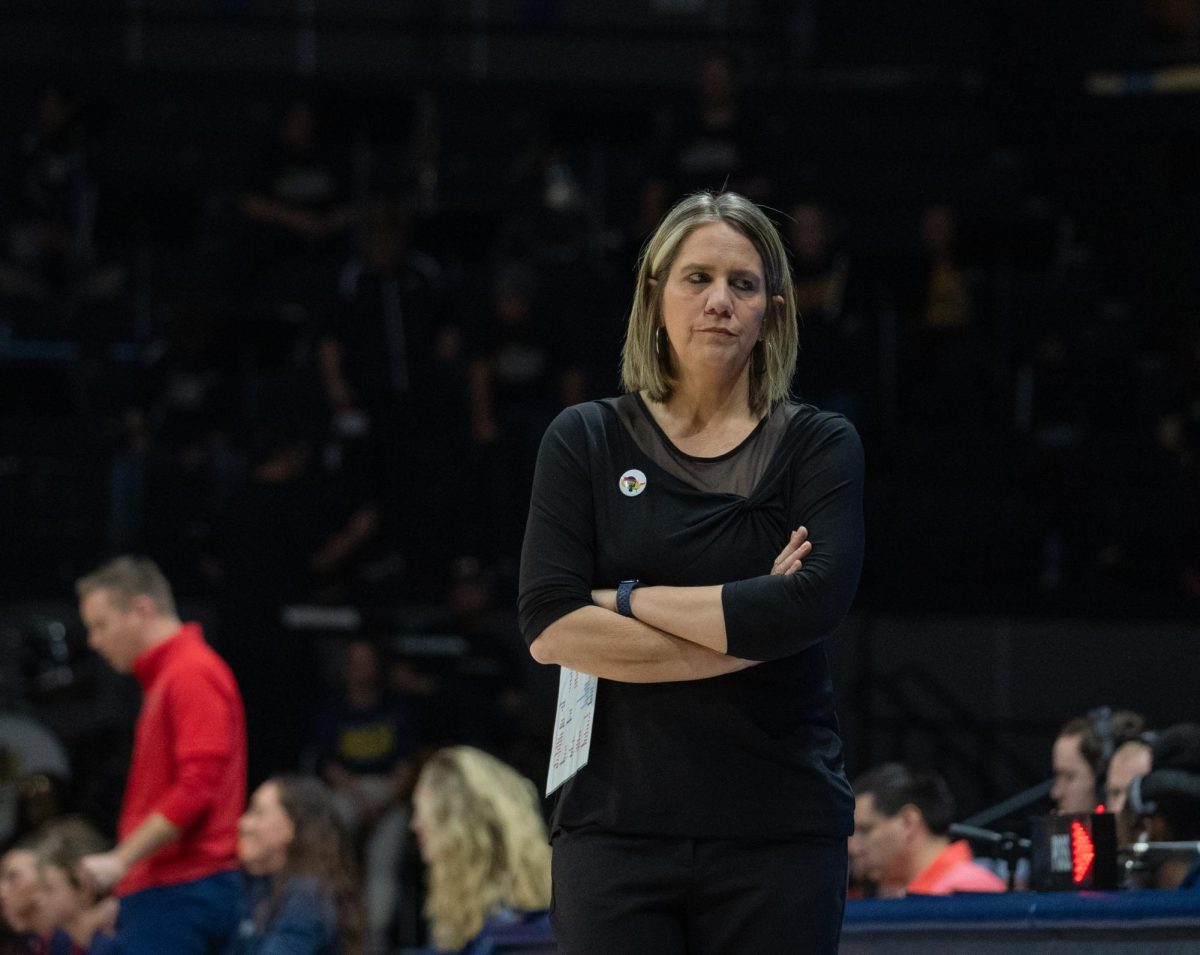






























Laura Foltz, vice president of financial affairs, stood before the Student Senate and answered questions during Wednesday’s meeting.
Foltz confirmed that the “My Finances” tab in MyGate has received an upgrade since the site’s last update. An additional “Details” tab has been added to the page, where students can view individual charges received, as opposed to viewing a lump sum bill.
Addressing the 2% increase in tuition, Foltz cited the growth of the Consumer Price Index, which had increased by 2.7% since January 2025. In regards to the allocation of these funds, Foltz said that Murray State University had undertaken a three-year faculty and staff compensation review, similar to an audit, to examine how much those on campus are being compensated for. The project is being undertaken by Evergreen Solutions LLC, and began in March 2023, with 2026 being its final year.
Foltz said she planned to hire a compensation manager to assist in the project.
“One of the things that I’m planning to do is hire a compensation manager, who can work on this full-time all the time,” Foltz said. “To look at how people are paid and try to help us keep more currents (faculty) so we won’t have so many gaps.”
Responding to concerns of students having to pay back miscalculated refunds on scholarships, Foltz said that FAFSA had made an erroneous calculation. This caused Murray State to be provided one number for each student, and then later, a revised one was sent to them. Foltz confirmed that this issue was outside of the scope of the University, and apologized to anyone receiving a revised refund.
Foltz responded to a question about the feasibility of raising the minimum wage for student workers on campus, answering that a 50% increase will cost Murray State University $200,000.
Foltz spoke on the precedence of this increase among the other needs of Murray State University.
“It’s on a long list of priorities that will move forward at some point,” Foltz said. “I don’t know whether or not that will be the priority, but it is on the list.”
When questioned about the fees that students received, Foltz defined some of the more commonly applied ones. The asset preservation fee allocates funding for the maintenance of campus buildings. The technology fee serves to upgrade campus facilities such as connectivity changes to Winslow Dining Hall and the Curris Center. The Racer experience fee covers costs for student life, scholarships and mental health resources.
Foltz responded to a question regarding the application of refundable and non-refundable scholarships by affirming her plan to bolster faculty in the financial aid office.
“We are going to beef up some of the financial aid office hirings so that questions can be better answered,” Foltz said. “Because I understand that there was a lot of turnover this last year and you may have experienced some difficulties yourself getting through to that office.”