



























































As artificial intelligence continues to grow in popularity and prevalence, its place in research and instruction is still being determined. Murray State University faculty weigh in on the use of AI in higher education.
Murray State does not have a campus-wide policy governing how students or instructors use AI, leaving faculty members to decide for themselves. While the University does have an Academic Honesty Policy, it does not specifically identify the use of AI as cheating. Rather, it emphasizes the use of “unauthorized information such as … electronic, online, or digital devices in any academic exercise.” If an instructor chooses to “authorize” the use of AI in their coursework, it would not count as academic dishonesty.
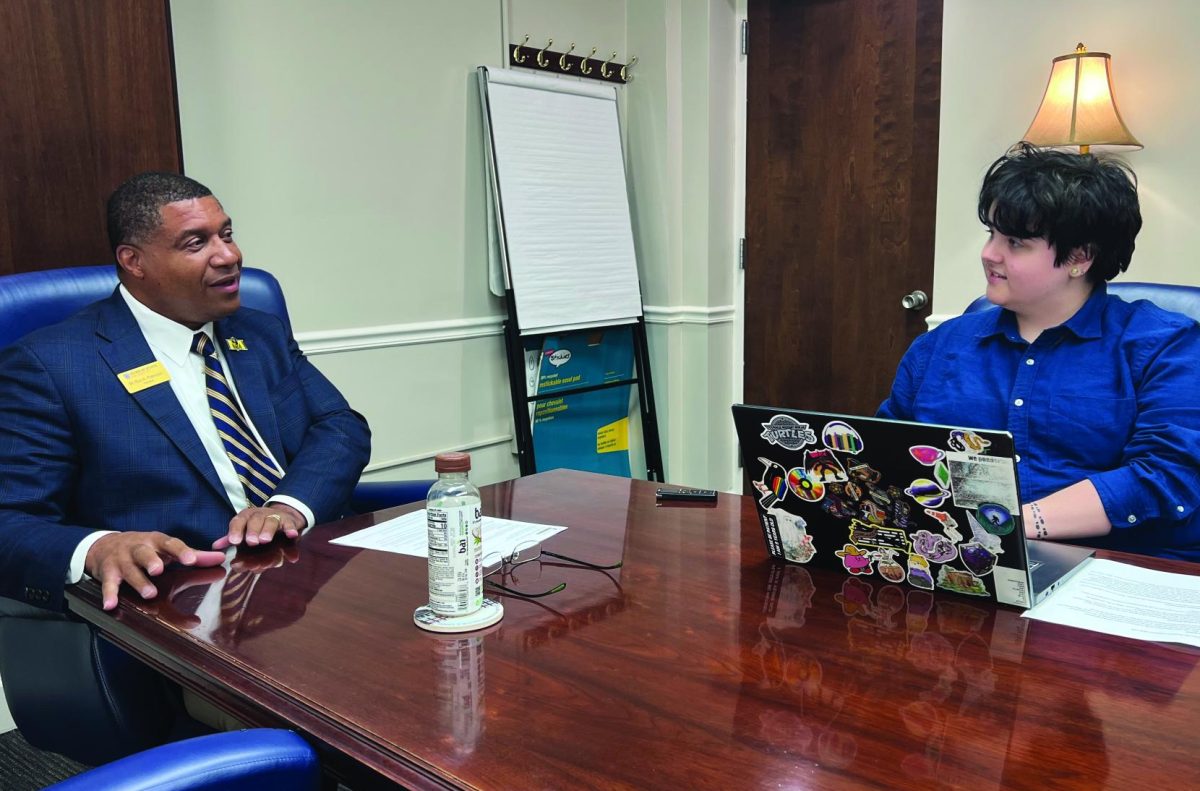
Ihsan Alkhatib is a pre-law adviser and associate professor in the political science and sociology department. He regularly uses AI as a tool, but notes that its use by students may hinder their ability to learn valuable skills.
“But the students should learn to do the work themselves without AI,” he said. “For example, doing research on a topic. The student should learn the skill of reading through lengthy academic articles and books, (and be) able to understand and summarize them and present a literature review. From that, they can write a paper.”
Alkhatib said he uses AI searches to find information on specific topics and runs all of his writings through Grammarly. He also plans to use AI to generate ideas for class discussions and exercises.
“AI makes everyone’s life easier,” Alkhatib said. “The issue is how AI is used.”
Matthew Tennyson, a professor and chair of the computer science and information systems department, serves on a university-wide task force that is working to define how both students and instructors should use artificial intelligence. Their work to draft these guidelines is still in progress.
As a professor, Tennyson encourages his students to view artificial intelligence as a tool – not a crutch to be relied on.
“I think it’s important for students to learn how to use AI well – what’s appropriate, what isn’t, and how it can be used conscientiously to support learning,” Tennyson said. “AI can be helpful for brainstorming, practicing skills, and getting feedback. At the same time, students do need guidance so they use AI to learn, not to replace learning. I try to talk with my classes about that balance.”
The existence of AI tools has also changed the way Tennyson plans his coursework.
“Because AI tools exist, I now try to design my courses with more emphasis on in-class work where they can demonstrate an understanding of the material,” Tennyson said. “Homework is still valuable for practice and active learning, but I use in-class assessments more heavily when I evaluate what students have learned and when assigning grades.”
He says the CSIS department in particular has moved to embrace AI as an academic discipline, as seen by the new offering of a certificate and minor in artificial intelligence and the creation of new courses in areas such as generative AI, natural language processing and computer vision.
“We’ve expanded our (computer science) and (Master of Science in Information Systems) tracks to include more AI,” Tennyson said. “We’re also proposing a new undergraduate major in artificial intelligence that we hope will be approved for next fall.”
There has been discussion in some academic departments – such as the CSIS department – about creating their own departmental policies on the use of artificial intelligence in research or instruction, but these policies have not been finalized or formulated.