
























































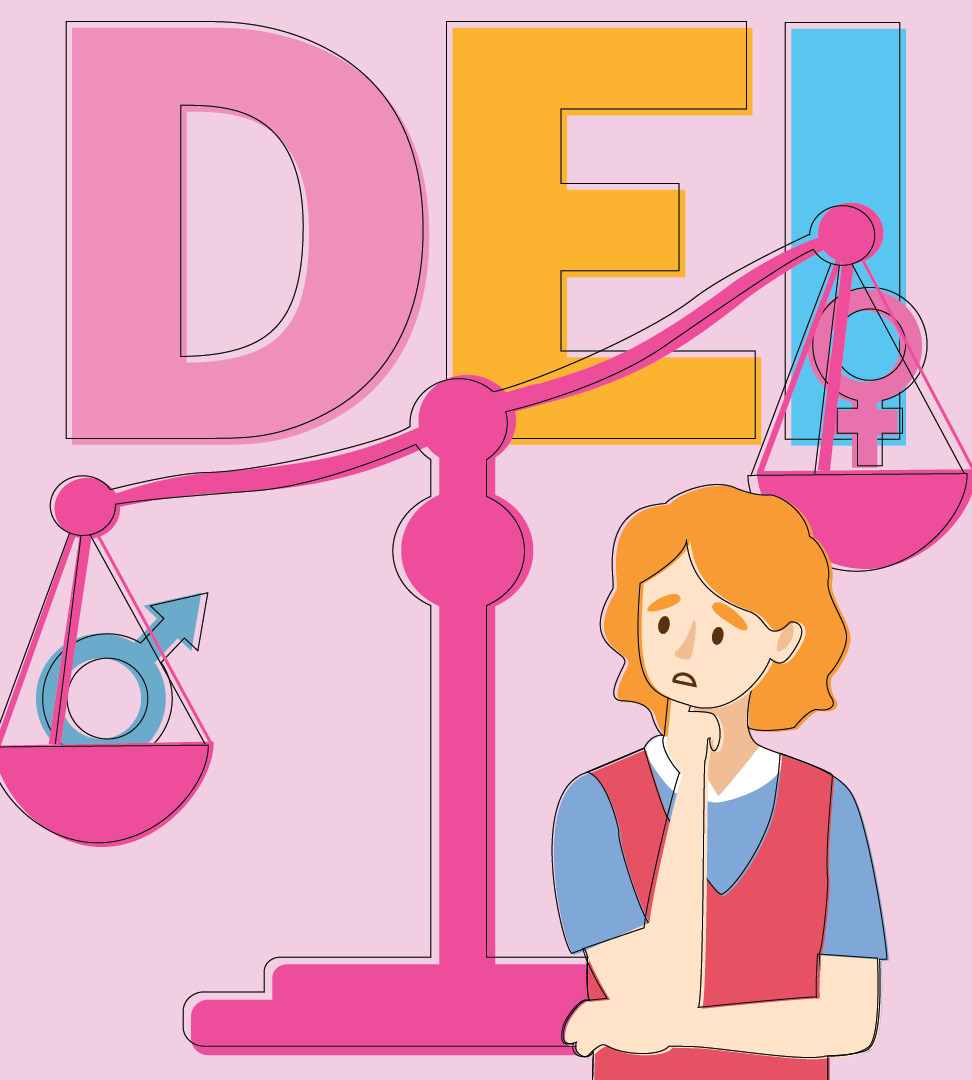
As Women’s History Month comes to a close, students and faculty say many are unaware of the campus resources available to them and offer suggestions for ways Murray State University could improve gender equity.
Following the passage of House Bill 4 last year — a law preventing public institutions from providing benefits or differential treatment based on factors like race and sex — Diversity, Equity and Inclusion programs were dismantled in public universities nationwide. Murray State was no exception, with the University’s Pride Center and Women’s Center becoming the Oakley Student Lounge and Oakley Resource Center, respectively.
Presley Billingsley, a freshman majoring in sociology, is the president of the University’s National Organization for Women Campus Action Network. She said the changes made to campus resources to make them compliant with HB 4 have caused some confusion among MSU NOW members who are now unsure of what resources are available to them and where to find them.
“That’s a really big issue we’ve been dealing with,” Billingsley said.
Resources for women on campus include the Oakley Resource Center, which provides free period products for those who need them. Billingsley said MSU NOW and some faculty members also stock certain bathrooms with period products when possible.
However, she said it’s something that the University could be doing campus-wide.
“Having period products in every bathroom — even the men’s bathrooms — would be helpful, especially with the rising costs of everything,” Billingsley said.
One of the faculty members helping to stock products in Faculty Hall bathrooms is MSU NOW faculty adviser Christine Lindner, an associate professor of history and the president of West Kentucky NOW. Lindner said there are even fewer resources for faculty than there are for students, and many faculty are unaware of the resources they have available to them.
“There’s confusion on, like, who do we even talk to when we have an issue when it comes to harassment or personal conflicts,” Lindner said. “Do we go to HR? Do we go to Title IX? It’s all very confusing.”
One thing she said would be a useful addition to faculty resources is an ombudsman — an independent, impartial official who investigates and mediates conflicts.
“An ombudsman would make a huge difference,” Lindner said. “Somebody who would be able to mediate the conversations between faculty, staff and administration and would be able to illuminate some of the gaps in services … I think that, to me, pursuing an ombudsman would be a really important kind of first step.”
Lindner said as a professor, students have expressed a sense of confusion about available resources and where to find them. She found her own solution to that problem.
“What I did a couple years ago was I just made a list of all the support structures and services for students on campus and off campus,” Lindner said. “I make that available on my syllabus, the homepage of my Canvas page, and now we’ve also uploaded it to the Canvas page of the history department … I share every semester with all of my colleagues as well.”
Lindner said the resources available to both students and faculty should be made more accessible and well-known, and wants that issue to become more of a priority.
“The fact that a number of our, you know — on-campus for both students and faculty — the resources have been renamed and so some people don’t even know about them” Lindner said. “And that’s coming from the federal government, but also the state government, and … I think the University is in a really difficult situation, but I wish the University would take a little bit of a bolder step to recognize how beneficial having women on faculty, staff and as students are, and taking more proactive steps to make sure that we are safe and feel fully valued.”
Billingsley and Lindner both said they felt seen, valued and respected as women in their respective fields and departments; however, they both acknowledge that it may not be the case for women in more science-based areas.
“I’ve talked to people in the science department, and (they’re) not treated as the same,” Billingsley said.
Billingsley also said she thinks the Title IX office should have a specific way of handling and labeling gender-based violence separately from other types of verbal or physical assault.
“I think there should be a differentiation between violence and gender-based violence, because they come from a different place,” Billingsley said. “I feel like there’s not enough of a distinction between gender violence against women and women who experienced violence.”
While a lack of knowledge about resources has been a longstanding issue on campus, the recent crackdown on DEI initiatives has made it more prevalent.
“I think in this current political climate, there’s a lot of uncertainty … of what we can talk about, what we can teach about, and it’s been very unclear, you know, what protections we have (and) where we can go for safe spaces to even talk about these issues,” Lindner said.
The University has a list of resources available on its website, both on and off campus. These include the Oakley Resource Center, the Oakley Student Lounge, the Counseling Center, the Racers Helping Food Pantry and others. West Kentucky NOW is off-campus, but also offers a number of resources, including period products.