
























































Students speak up about their concerns regarding the conflict and what it could mean for the country.
On Feb. 28, American and Israeli forces began the weeks-long conflict with operation “Epic Fury,” launching heavy airstrikes against Iranian military infrastructure. In his announcement, President Donald Trump said the attack was intended to cripple Iran’s missile industry and eliminate its nuclear threat. The war also follows months of aggression between Iran and Israel, and a growing Iranian protest movement against the country’s oppressive government.
According to a study by the Pew Research Center, 44% of Americans disapprove of Trump’s handling of the Iran war, with over half saying it was the wrong decision to use military action in the country. At Murray State, student opinions were much the same.
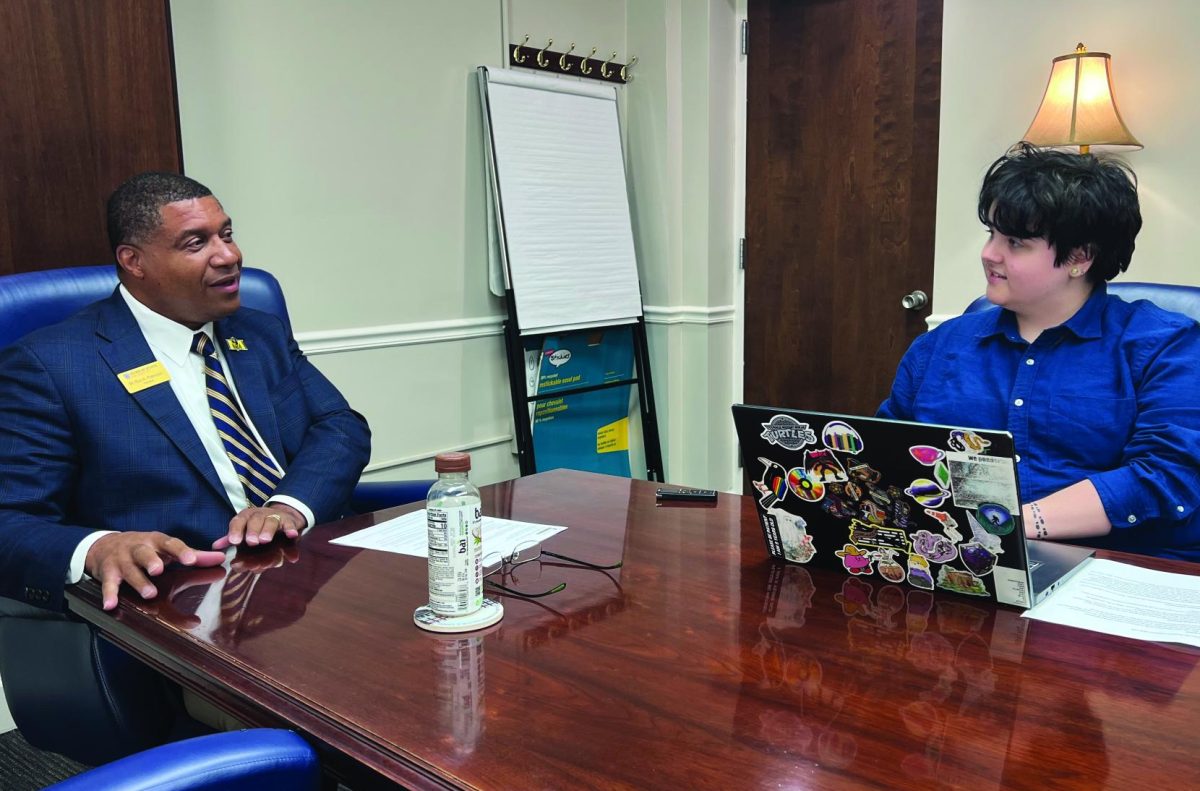
“I really do not agree with this administration at all, and I think it’s a pretty stupid thing to put us into a war, especially if they’re promising not to put us in any more wars,” said Abby Martin, a freshman pre-vet major.
Martin, like many of her peers interviewed by The News, expressed her disapproval of the war and said it was tragic to see people on both sides dying unnecessarily. Martin, who lives about three hours away from Murray State, said gas prices had already risen 60 cents when she made it home for spring break.
Keaton Flint, a freshman computer science major, also expressed his disapproval of the war and said it was a waste for the national economy. Flint said this war was another broken campaign promise by Trump, whose promise for peace has become a multi-billion-dollar overseas conflict.
“They say we don’t have money for healthcare, childcare or education, but we can spend a billion dollars a day bombing innocent children in hospitals and schools and Iran,” Flint said.
Along with gas prices, Flint said he was worried the war was negatively affecting our relationship with our allies as the country continues to fumble on the world stage. Flint said it was a bad look for the administration that backed out of the Iran Nuclear Deal to launch a war to prevent Iran from getting nukes.
One anonymous student who identified themself as an army veteran spoke out strongly against the war and the current administration, saying this conflict was only a way to line pockets and secure support in the face of mounting disapproval.
“Trump saw the writing on the wall; he saw how he was being looked at,” they said. “And in the past, presidents that have gone to war have looked better, except he was just thinking of the Middle East and forgetting about how the reception of the Vietnam War happened.”
The student criticized Trump’s reasoning for the war and said the country had been saying Iran was weeks away from a nuclear warhead for decades. Like Flint, they said they worried about how this could affect our relationships with our allies and economy.
As for how the war could turn out, the veteran said they worried that it could turn into another prolonged conflict like Afghanistan, one with no easy out.
“It could be another 20-year war of attrition,” they said. “Iran’s military is not a threat, but that’s not the issue. It’s the same issue we had with the Taliban; you don’t know who they are because they don’t wear a uniform.”
Noah Nolan, a freshman cybersecurity major, also criticized the Trump Administration, saying the war is disrupting resources and said progression would be wrong.
He also said the war partly exists because of the U.S.’s relationship with Israel.
“I feel like (Israel) definitely persuaded the U.S. to go to war,” Nolan said. “But I don’t think we were forced into it. I feel like we also went there for our own reasons — not that they’re right.”
So far, over 1,937 Iranians have been killed as a result of American and Israeli strikes since Feb. 28, many of whom being civilians. So far, 13 U.S. service members have been killed during the conflict, including Army Sgt. Benjamin N. Pennington of Glendale, Kentucky,, who was one of the first soldiers killed during Operation Epic Fury. U.S. operations came under criticism after a U.S. airstrike targeted an Iranian elementary school, killing around 175 children and adults.
The conflict has also had significant economic impacts on the country, as the cost of oil and gas is on the rise. Iran controls parts of the Strait of Hormuz, a vital passage for nearly a quarter of the world’s natural gas trade. Since the war started, much of that trade has been blocked by the Iranian government.