











































Provost finalists gathered at Wrather Hall this week to make their pitch to be the next academic administrator for Murray State University
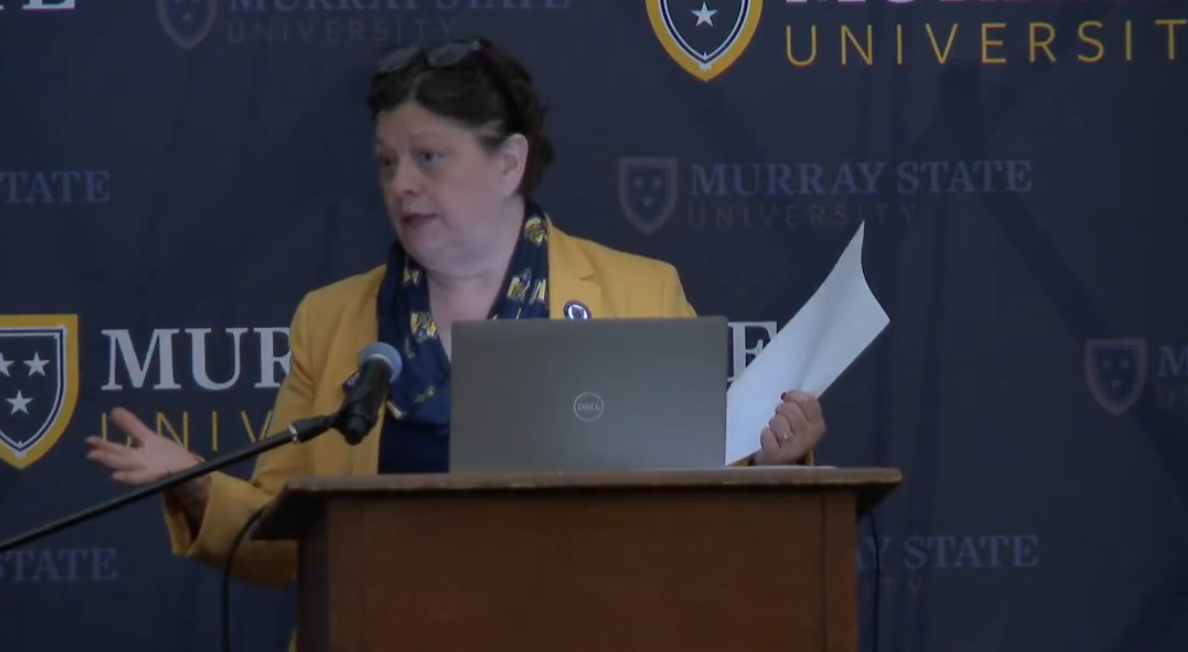
This week, finalists Aimee Shouse, Brian Parr and Paul Twigg took questions and made their address to the Murray community for why they should be chosen for Murray State’s next provost. On Monday, Shouse appeared in front of faculty and students to address her academic qualifications and plan for the University.
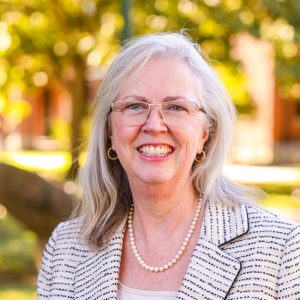
Shouse has worked in academic leadership roles since 1993 and currently serves as associate provost and vice president for curriculum and faculty affairs at Tarleton State University in Stephenville, Texas. Shouse said her skills lie in building relations and managing interactions, something she said would suit this university more than it does her current role.
“Across the course of my career I just gained a lot of knowledge and a lot of experience from multiple institutions,” Shouse said. “Which leads to a point where I think I would like to make a bigger impact than I can as an associate provost.”
After her introduction, Shouse took a question from faculty regarding deficiencies she had seen in Murray State’s curriculum. Shouse responded that as an outsider she did not want to come into the University critiquing its curriculum and faculty without the context and experience to understand it. Shouse said she hopes to work with faculty to learn what can be done and get a lay of the land before she makes serious decisions.
On the role she wants to play for faculty at the University, Shouse expressed that her job would entail both advocacy for faculty ideas to academic affairs as well as defending academic affairs when necessary. Shouse said that people know what’s best in their roles and disciplines, but that all ideas have to be tempered by what’s best for students. Shouse said her job required both advocacy and communication.
“In my previous institutions there were people who, in other divisions of the institution, really felt like they knew what academic affairs should be doing, that they maybe had more insight,” Shouse said. “You have to be open to that, you have to be willing to listen to people’s ideas. But at the end of the day academic affairs has to do what the leadership and working with people in academic affairs thinks is the best approach.”
During the town hall, Shouse was asked how she plans to manage and insulate faculty from the decisions of the state legislature. Shouse took the opportunity to discuss post-tenure review and how the legislature makes policy off exceptional cases of misconduct and negative stories about higher education.
“What people assume is happening, not correctly, is that people get tenure and they hang it up and just show up to their class and the idea that someone is pulling out their dusty notes and they haven’t updated them,” Shouse said. “Do I know where that’s happened? Yes, I have examples in my mind. Is that the norm? Absolutely not”
The answer, Shouse said, involved getting to know the legislature and spreading the story of how Murray State positively uses state resources and cares for its students. At the same time, Shouse said the University has to look at the best ways to implement the laws that have already been passed. Regarding post-tenure review, Shouse said the University could comply with the law and ensure that people are complying with the expectations of the job cyclically.
Shouse closed her town hall by describing to the attendees what she wants them to know about her, including her desire to help people succeed and how she works well with people.
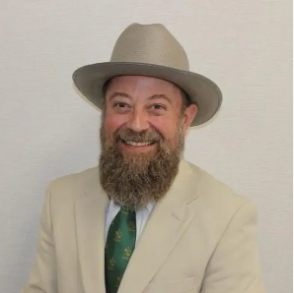
On Tuesday, provost candidate and current Dean of the Hudson School of Agriculture Brian Parr took the stage to make his pitch for the position. A Murray State dean since 2023, Parr made his bid for provost during the first search last year. Parr said after he was turned down for an interview at Murray State the search firm offered him a chance as a provost elsewhere. Parr declined and said one way or another he intended to retire from Murray State.
Parr said this is the University that suited him best in his interests, his philosophy and his desire to support first generation students. Parr said his goal as provost was to be open and accessible to students and to be a champion for academic programs, faculty and the whole University. He said he views the job of provost as removing roadblocks to educational success.
“I was a little bit worried what my students would think when they saw my name here, you’ve applied for provost, what are you doing?” Parr said. “So I explained to them what I was doing andIi got this very profound statement back from a student, and he said, ‘What’s a provost?’ … that really gave me a goal as provost because a student doesn’t know what in the world a provost is.”
Throughout the town hall, Parr was asked his plans for the University and how he plans to support students. Parr’s response often involves listening to industry and seeing how the University could suit students’ career needs.
When asked about the top issues he sees schools facing, Parr discussed the idea of relevancy and staying up-to-date with the industries the University serves. Parr said the University may see a rise in deviations to traditional bachelors degrees including shorter degree programs and certificate degrees. Parr said the University should reach out to the community to offer more programs like this to meet the needs of industry.
“It turns us to a more utilitarian approach in some senses, but it’s another option,” Parr said. “To deliver not always the education we think they need or that we wish they needed but that the industry tells us they need.”
Regarding deficiencies or changes needed to the Murray State curriculum, Parr said he agrees with how the University has gone about expanding the curriculum to meet the needs of industry. Parr said he trusts faculty to know what’s going on in their industries and how the curriculum can meet that.
“If we’re providing education programs to prepare students for a career that doesn’t exist, we’re irrelevant,” Parr said.
When asked about the provost’s role in supporting undervalued programs such humanities and fine arts, Parr said he would be a short sighted provost not to see the values in those fields. Parr followed that up by talking about programs that don’t lead necessarily to a degree program. Parr said it’s important to have a voice at the table that doesn’t just meet the call for industry but the development of a more well-rounded citizen.
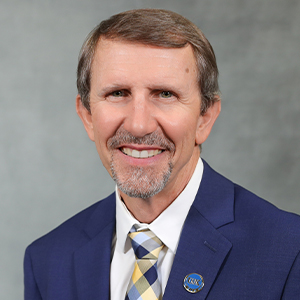
Provost finalist Paul Twigg appeared at Murray’s Wrather Museum to discuss his views on shared governance, student support and his bid to be the next provost of Murray State.
Twigg serves as the dean of the College of Arts and Sciences at the University of Nebraska at Kearney, where he has worked for the last 33 years. Twigg earned bachelors in chemistry and biology from Indiana University of Pennsylvania and a PhD in botany and biochemistry from the University of Tennessee.
“The search firm came to me with this opportunity last October,” Twigg said. “And I thought at the time, ‘Man this looks like a really great opportunity. It looks like some place where I could really fit in.’ Whether it is the growth and the health programs and the vet school, it just looked like it resonated well with me, but I wasn’t sure I was ready.”
Now, however, Twigg said he believes his skills are suited to the University, including his work in botany and agriculture and his experience advising veterinary students. During his time at the University of Nebraska, Twigg said he’s navigated the university through budget cuts as well as secured grant funding for health and social sciences.
Twigg said one of the things he had heard about the most regarding Murray State was the desire among faculty and students to have a voice in how things run. He said his leadership style includes hearing from everyone in the campus community on what they need or think. Twigg said that strategy had helped him through difficult times, such as dealing with budget cuts.
“I can’t promise you every last thing you need,” Twigg said. “I can’t promise that I’m going to make everything okay, but I’m promising that I will absolutely listen to you and give you a voice in the decisions being made and that my experiences up to now have given me good preparation for helping to figure out pretty much any situation that comes in front of me.”
When asked how he intends to support first-generation college students, Twigg took the opportunity to discuss his approach to academic advising and student support. Twigg said his university has worked on ways to make advising more holistic and focused and supportive for student success.
Part of the advising reforms Twigg discussed included making sure advising work at his institution was reflected in teachers’ workload so they were properly prepared and recognized for their work. Twigg said he wanted a culture that focused on student success from top to bottom.
“Investing in student success in a lot of cases is just letting them know you care and are there for them,” Twigg said.
During the town hall, Twigg was also asked about his approach to dealing with the state legislature and protecting faculty from certain legislative action. Twigg responded by discussing his own work, getting to know his state legislature and advocating for his school’s needs.
“I’m not afraid to go advocate first hand,” he said. “I’m not afraid to approach people with a plan or to, if necessary, short of figuratively poke them in the chest about the plan they are advocating for being a bad idea.”
As for protecting faculty, Twigg said he wanted to work to ensure faculty were knowledgeable and prepared for legislative actions affecting them. Twigg said he advocated for academic freedom and the ability for faculty to research whatever they desire.