











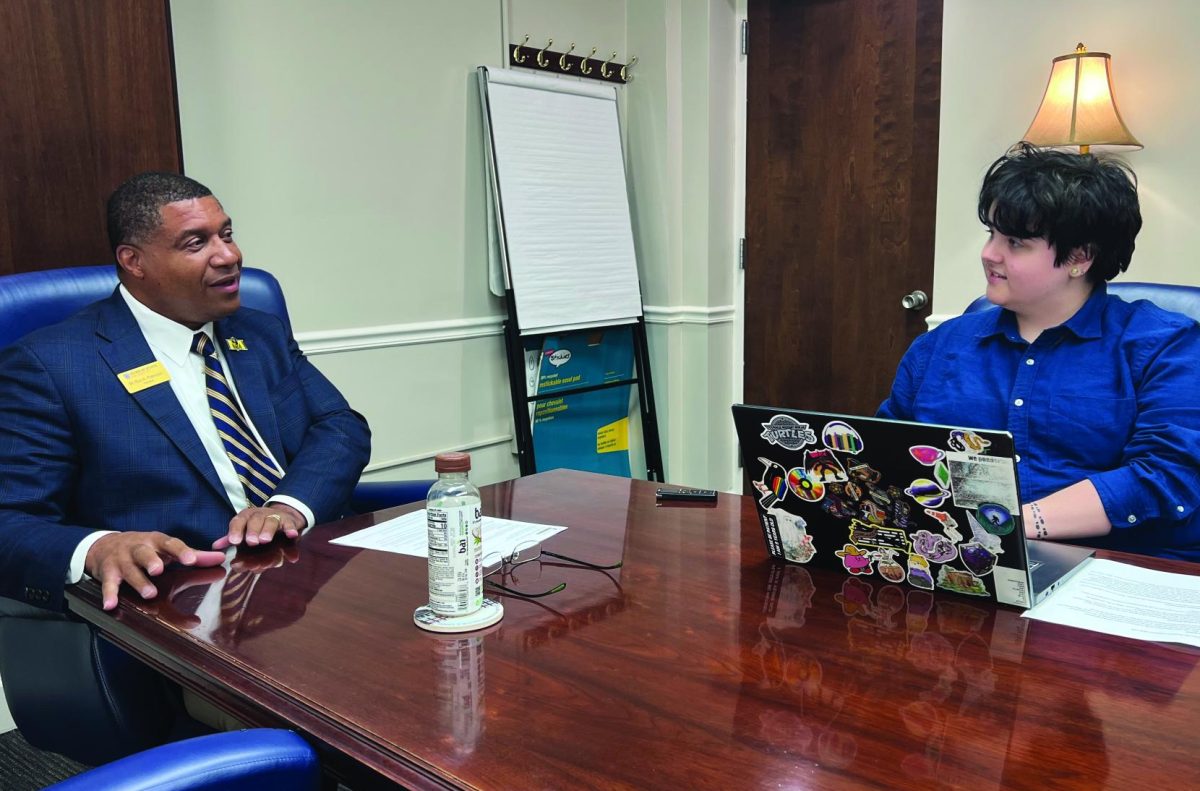
























The Faculty and Staff Insurance and Benefits Committee voted on a new employee health insurance model for 2026. Members can expect an increase in their contribution costs.
The committee was given the choice between two plans for the upcoming year. “Option A” consisted of an 80-20 split, with Murray State University bearing 80% of the cost while faculty and staff would pay 20%. “Option B” was an 81-19 split. Option B won the majority with 13 out of 14 votes.
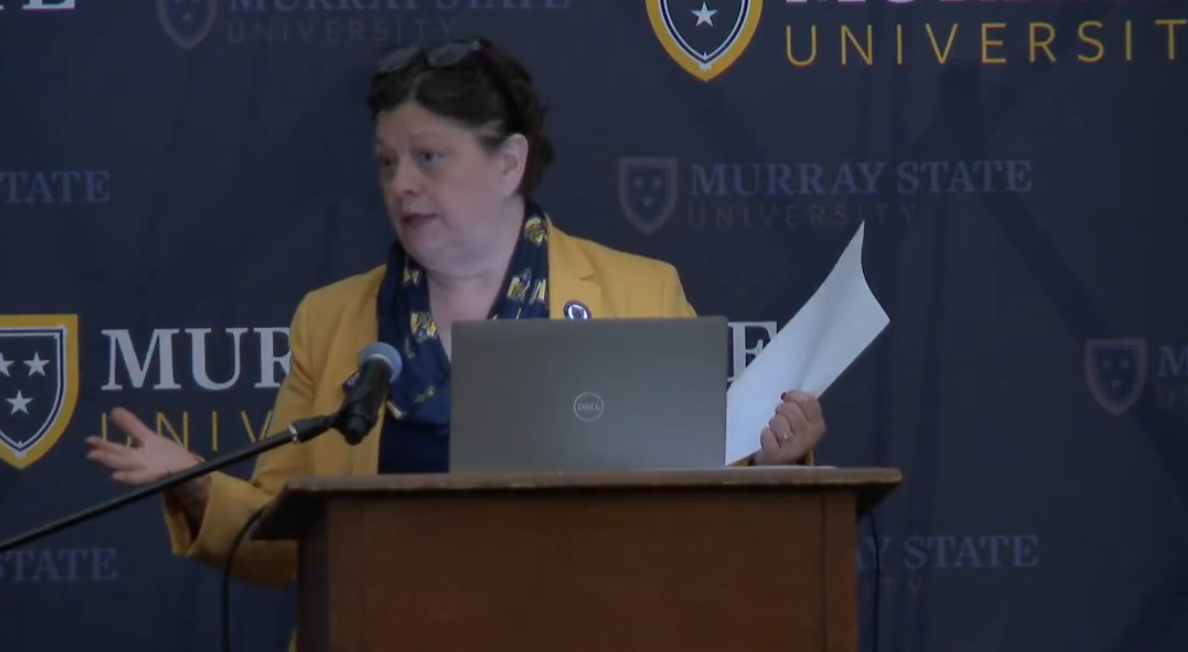
Director of Human Resources Courtney Hixon emphasized that the decision being made was only for the 2026 year, not for 2027. Hixon said she thinks “we need to do a deeper dive for ‘27 and have more of (a) discussion.”
“I think, institutionally, we need to think about maintaining a more affordable increase each year for everyone as we continue to move forward,” Hixon said. “I think all of us as a committee have talked about that before, and I think that’s how we need to approach this and think about it.”
For 2025, the University contributed 83.2% while faculty and staff contributed 16.8%. A goal was set as part of a three-year plan to reduce the University’s contribution to 20%.
“This three-year plan was to get us back to where we were before we had the stagnant years through the (COVID-19 pandemic), where there was no increase,” said Marcie Clark, the assistant director of benefits for the human resources department.
Matthew Amick with the Marsh McLennan Agency, an insurance broker company, said the 2025 year did not go as planned.
“When we were doing this last year, for the 2025 plan year, the numbers were to get us to an 82.6% split. But, through that open enrollment, there was a shift in enrollment to the lower cost tiers where Murray State’s picking up a higher percentage,” Amick said. “How it actually played out was Murray State ended up taking on 83.2% instead.”
Amick said that higher increases cause members to switch to cheaper insurance plans, which, in turn, means the University ends up contributing more money. Therefore, Amick said that even with whatever option that the committee had selected, the 2026 year may not go as planned.
“If we continue with large increases, then with adverse selection, we’re (going to) have reduced the health of our plan. People will not be able to afford to be on the plan,” Clark said.
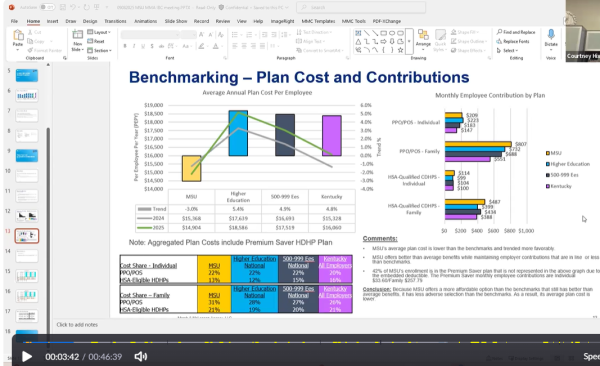
Graphs and statistics provided during the meeting by the human resources department showed that Murray State’s monthly employee contributions are higher than most of the benchmarks for Kentucky and higher education.
According to Amick, as the University moves closer to 20% employee contribution, “the benchmark generally increases anywhere from 5% to 8% on average.” Option B would provide a more gradual increase in cost, garnering the favor of the voters.
Hixon said that as far as the benefits and plan designs go, the “only thing that’s changing from a deductible standpoint is going to be for the Premium Saver (plan)” in compliance with IRS regulations to maintain the embedded deductible.
“Every year, the IRS continues to … increase what the minimum can be for the annual deductible,” Clark said. “Currently, for Premium Saver, because that’s our embedded plan, the individual (minimum) currently is $3,300 (and) it will go up to $3,400.”
Clark said the minimum for family plans will increase from $6,600 to $6,800.
History professor David Pizzo said that the determination to get to an 80-20 split is not an end-all, be-all situation, given how low salaries are.
“I’ve been here 20 years … (and) our benefits aren’t what they used to be. I mean, I’m very sensitive to this because of the staff. Listening to my admin talk about how she barely makes enough to justify working at all anymore. That’s the point we’ve hit,” Pizzo said. “I just want to point out, given how poorly we’re paid in general, that I don’t think it’s the end of the world if we are floating at an 83.17.”
Pizzo emphasizes that the 80-20 goal is an idealization from higher-ups and not something that employees should feel the need to cater to.
“I’m just encouraging the faculty and staff to not just take these things as natural laws,” Pizzo said. “I just am encouraging you all to not just passively accept that this is how it works elsewhere, and therefore it’s gonna work this way. I don’t think we should just accept this. … We’re talking about (it) like it’s the weather, but it’s not. It’s a choice that our bosses have made.”
The Faculty and Staff Insurance and Benefits Committee plans to conduct a deep dive into plan designs for the 2027 year in January.