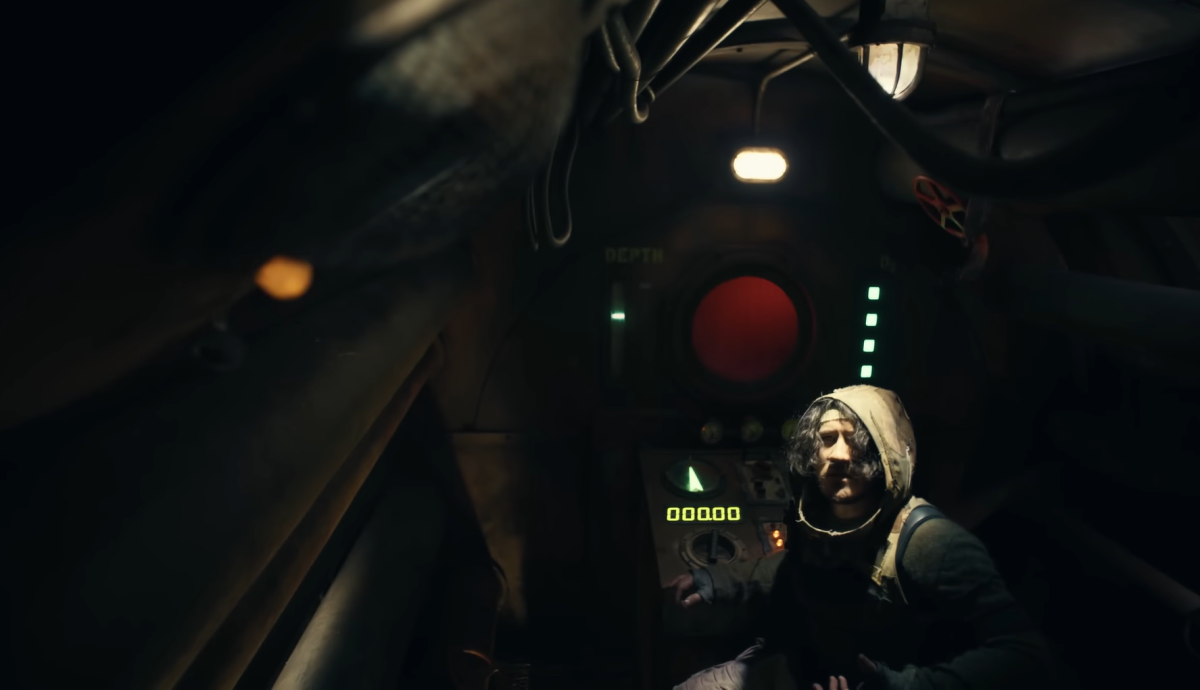






























































The Cinema International Program at Murray State University recently showcased Flow on Sept. 8 as part of its eight-film series for the Fall 2025 semester. All viewings are held on Thursdays at 7:30 p.m. in Faculty Hall Room 208.
Another existentialist masterpiece has arrived at Murray State—this time in the form of a “Movie Night.” Flow, an animated adventure film, reflects one thing humans value as a fundamental aspect of reality: community.
Considering the political climate of this past week, the rising desire for “niches” and the fact that anthropology is an entire discipline devoted to humans, it is clear that we value one another. Many of us, however, fail to understand the full meaning of community. We often hear about the bright side: a group of people sharing similar characteristics. Entering communities, individuals may envision a sense of belonging, trust or a diverse friend group relaxing on the hills of campus. A very small number of us, however, may imagine something stranger—seven individuals creating six different realities through “Puerto Rican chess.”
Nevertheless, Flow illustrates how communal relationships can prevail even under catastrophic circumstances. Set in a fictional, post-human world, the film features a flooded forest with the ruins of a grand city, possibly inspired by Southeast Asian architecture, and later a mist-shrouded forest reminiscent of the Fanal Forest in Madeira, Portugal. The story follows a black cat, a Labrador, a capybara, a ring-tailed lemur and a secretary bird, which in my opinion technically qualifies as “Bird Jesus.” Amid a climate disaster, these animals are forced to form connections despite their differences. Some are exiled; some even perish.
While the film may hint at political undertones of Leon Trotsky, it does not engage in them. Instead, it demonstrates how a community can convince an individual that there is more to life than the self. Inevitably, storms will wash away the trees built for swings. Yet there will always be a capybara to gather the seeds, a secretary bird willing to sacrifice himself to help a sprout grow, a lemur who may exploit your branches but still waters your leaves, and a Labrador, a mess himself, who is nevertheless willing to help you install the swing.
It is important to remember that this is not a step-by-step comparison of tree swings and human relationships, so I will stop here, unless you want to dive into how the sinking Moai of Easter Island reflect human nature succumbing to itself. I digress.
As we adapt to the rhythmic flow of college, many of us will find ourselves isolated. Isolation can feel detrimental, as though existence is reduced to the self alone. But that is not the case—what you are truly lacking is community and connection. Throughout this article, I implore you to find the common ground between isolation and contact. Whether it is through shared interests, matching shirts or even shared phenotypes, there are people and communities willing to accept you into their circle and reflect upon the waters of greatness.