



























































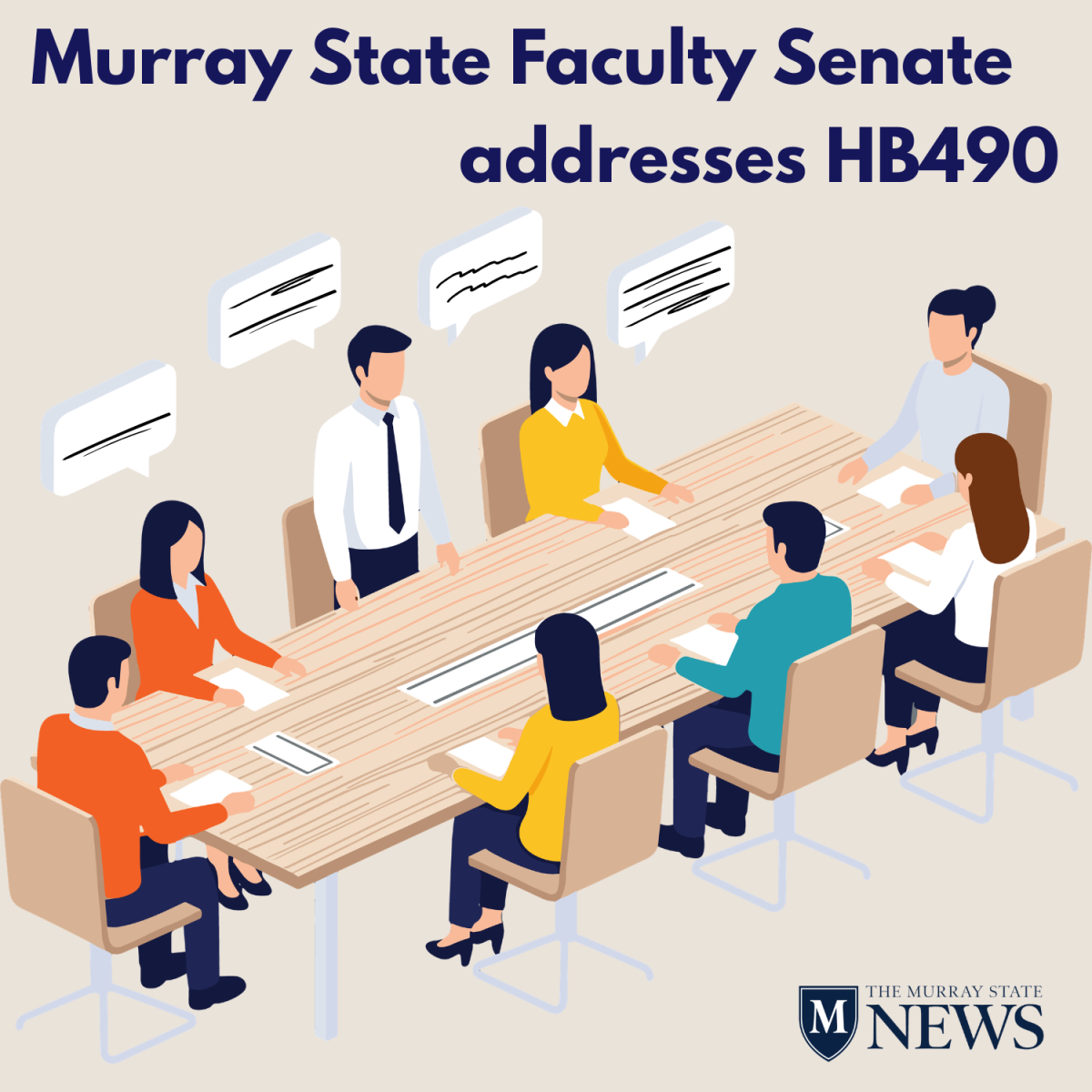
Murray State’s Faculty Senate has drafted a new policy regarding “dismissal for bona fide reasons” in response to House Bill 490.
Following the passage of House Bill 490, which allows for the dismissal of faculty beyond financial exigency, the Faculty Senate drafted FSH 26-27-7 to outline the process for such an action. The policy primarily changes section 2.8.5 of the handbook, removing prior financial exigency specifications. In accordance with the bill, faculty may be dismissed due to financial exigency; low enrollment in a program or major; or the misalignment of revenue and costs in a particular college, department or major.
A difference in procedure is described between tenured and non-tenured faculty members. Tenured faculty will be protected from dismissal if there is a non-tenured member within their same department or unit, along with receiving a 12-month notice. They will also be prioritized for hiring in the same position for at least two years. Non-tenured faculty will receive only 30 days’ notice. Both can appeal the Board of Regents’ decision.
To begin the process for dismissal, a provisional committee will be established, consisting of seven faculty members: three chosen by the Faculty Senate, three chosen by the University president and a chair chosen by both the Faculty Senate president and provost. The University president will then provide the committee and the subject with the appropriate documentation that supports a faculty member’s dismissal. The affected faculty member may then present their own documentation before the committee for a hearing. Multiple hearings can occur, with the committee being allowed to dismiss several faculty members for the same financial reason. When they are prepared to move forward, the committee will then issue written findings to both the affected member and the University president. The latter will then send this documentation to the Board of Regents.
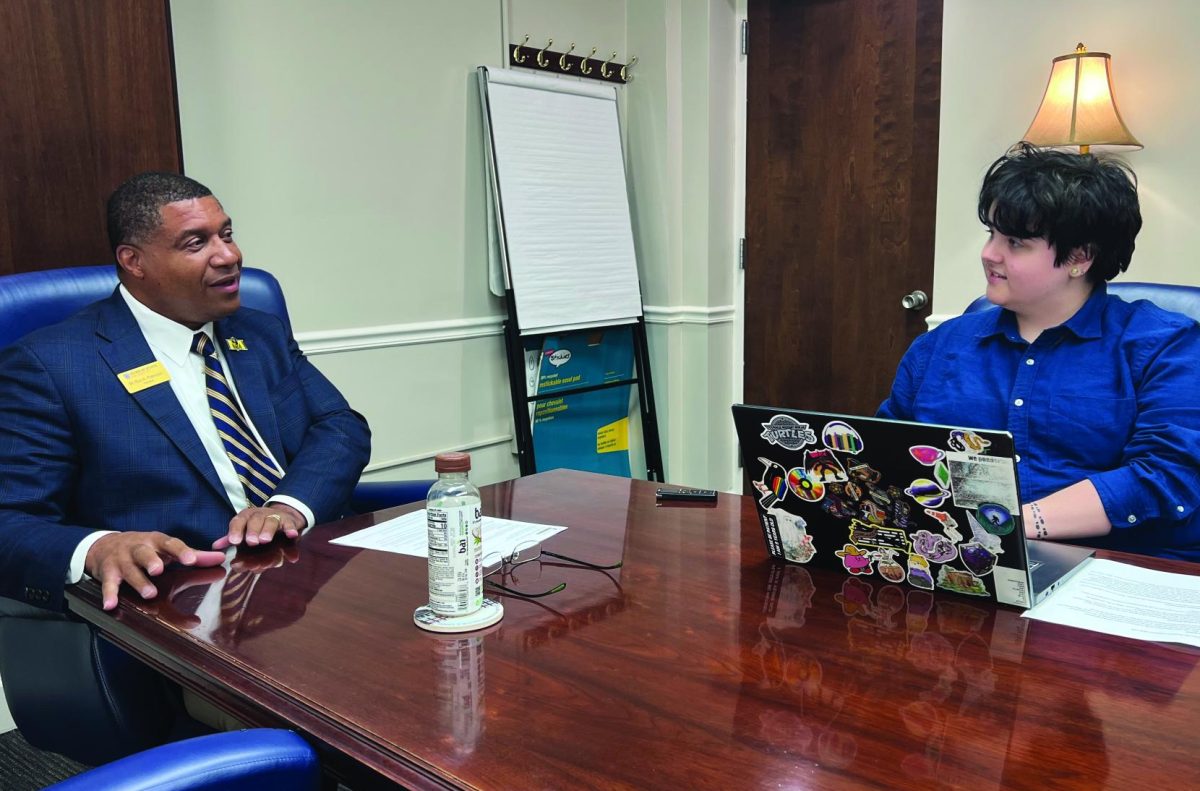
Senate members raised concerns regarding the power of the University president should a decision be made to dismiss someone due to personal bias or political reasons. Ray Horton, an associate professor of English, spoke about his concern for unjustified removals.
“We have seen from a lot of our colleagues at other institutions that have not had the genuinely good blessing of having (good) leadership, where it is openly said that HB 490 is damaging the institutions,” Horton said. “There are other universities in Kentucky whose leadership is gaslighting their faculty and telling them nothing’s happened … You saw what Ron DeSantis did in Florida with the New College, for example, and other places where they can just purge the board and replace them with people who are going to be micromanaging at the chair and dean level.”
Senate members also expressed skepticism about the language of House Bill 490, citing its assumption of the Board of Regents controlling the hiring process on an individual basis. This instead occurs at the department level, while the University president and Board of Regents only approve the new hire. Aaron Irvin, a professor of history, said there is a disconnect between how HB 490 is written and how academia works.
“The way that 490 has been written, somebody perceives that the board is involved in employment decisions on an individual basis, that it is the board that is making these decisions about tenure and hiring and so on, when of course we realize that that’s not the case,” Irvine said. “It’s the chairs, the dean and the (University) president, and the board sort of gets that stuff at the very end and pretty much rubber stamps what’s already been handed to them.”
Other solutions beyond dismissals were offered for situations of short-term financial hardships, such as furloughs or sabbaticals, so as to maintain a faculty member’s contract.
The Faculty Senate will host several listening sessions for feedback on the revision. Listening sessions will be from 3 to 4 p.m. on April 15 and from 9 a.m. to 10 a.m. on April 16. All sessions will be in the Barkley Room and available via Zoom. The executive committee will host an open drafting session from 3:30 to 5 p.m. on April 21 in 118 Wells Hall, with a Zoom link available. The Faculty Senate plans to present a draft of the revision to Paul Twigg, the newly chosen provost, when he begins his employment during the summer.