


















































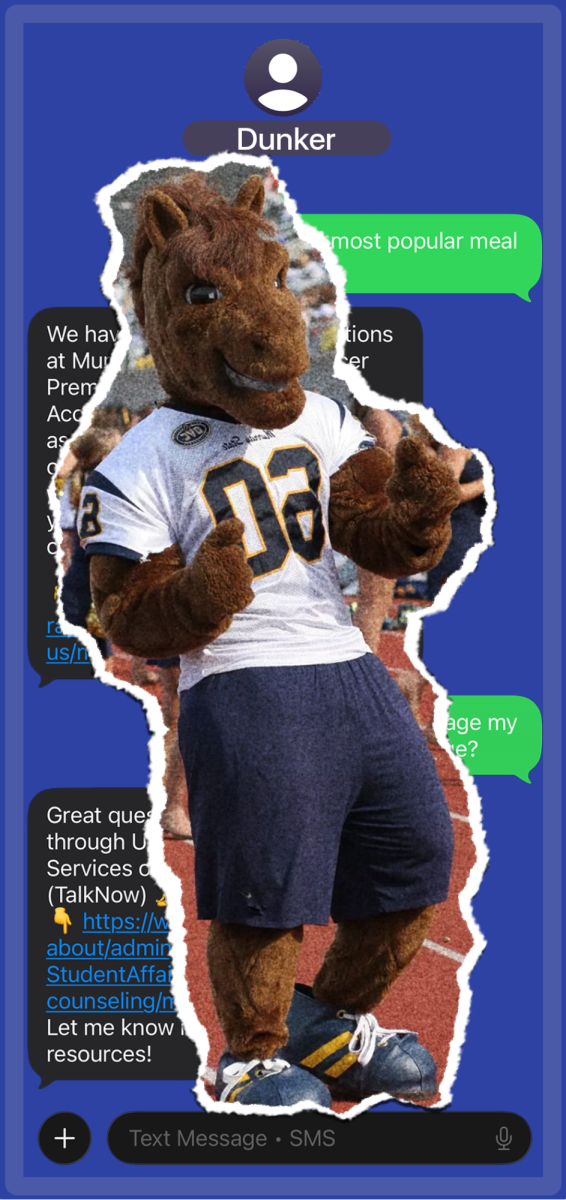
The Dunker AI chatbot was implemented by a commission on retention and persistence, formed shortly after Ron Patterson’s presidency began. The commission is composed of University staff across the Office of Academic Affairs and the Office of Student Affairs. The program has been in development since November 2025.
So far, University officials have not directly sent students a detailed explanation of what this chatbot can do, the limits of what students can do with it or why University funding is going to this program instead of elsewhere on campus.
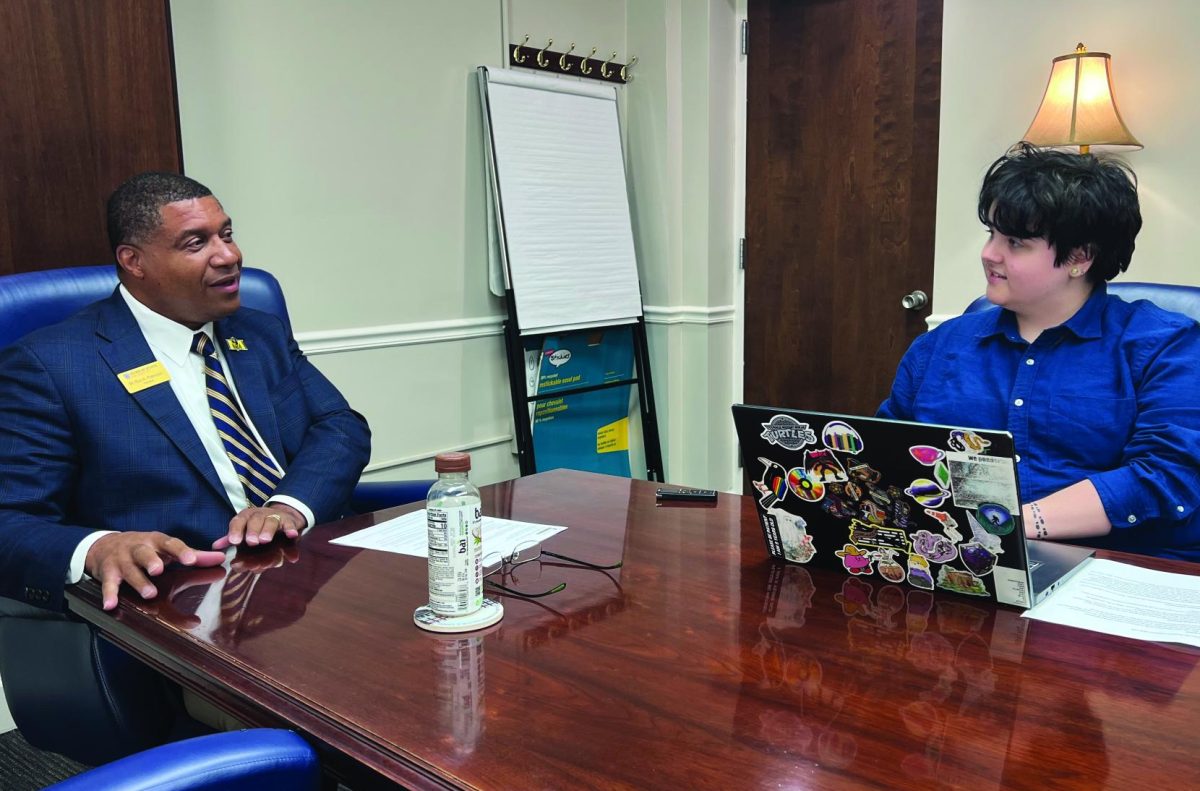
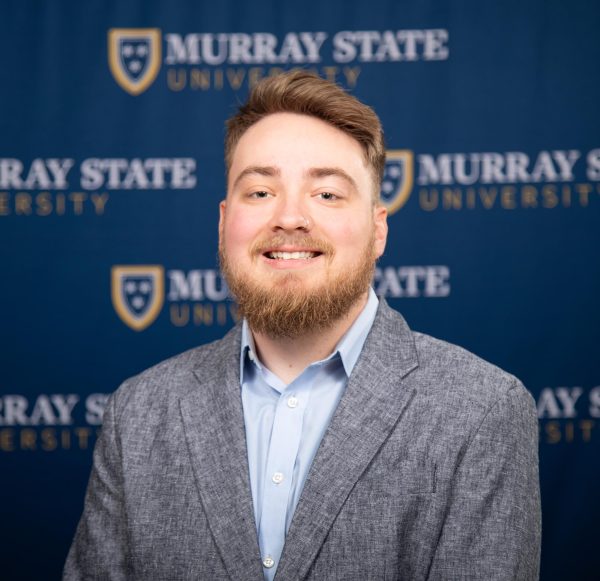
Jordan Garner, director for the Center of Student Engagement and Success, provided some clarity on the program’s functionality, intended benefits to Murray State students and the University’s operational goals.
Q: How does the chatbot work?
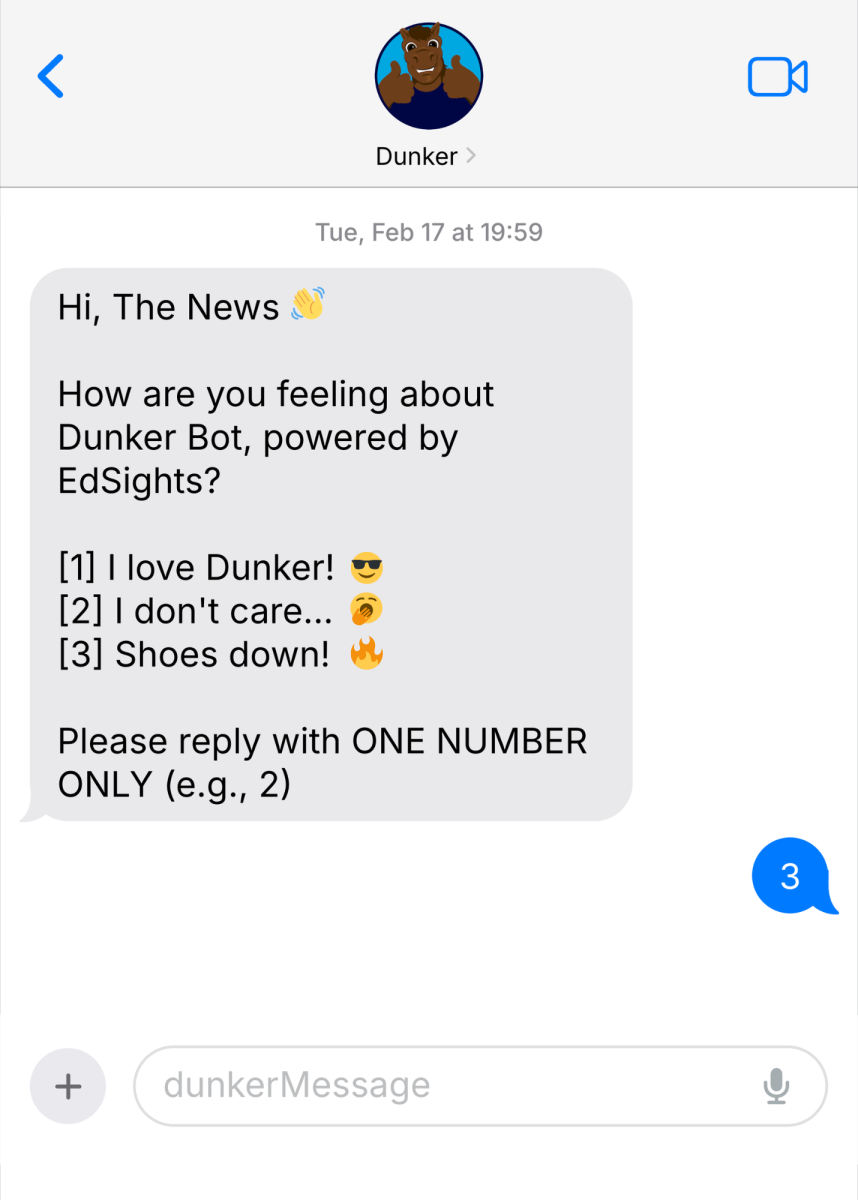
Garner: It’s going to message students in two ways. It will be proactive, so it will send out regular messages throughout the semester checking in with students to see how they are liking their classes, how they’re doing personally (or) socially. It will also be reactive, so students can text the chatbot 24/7 and get responses that help answer their questions or point them to resources and things like that.
It’s SMS chat-based, so it will only communicate through text messaging with the students. It’s personalized to Murray State University, so it will be knowledgeable about resources here at Murray State specifically (and) taking on the persona of Dunker.
Q: Does it operate on pre-programmed inputs or generative models?
Garner: It’s more the first thing. When we say “AI,” it’s not like ChatGPT or Google Gemini, where it’s surfing the web or creating its own personality. It relies on a scripted answer we have given it already. The knowledge base for the chatbot is information we have given it. It’s not going to go off script and find information elsewhere. It’s very self-contained in Murray State’s realm here.
Q: What kind of questions can it answer?
Garner: Students can — with the responses to the check-ins the chatbot will be sending or just 24/7 random texting — ask questions like ‘How can I get a hold of my academic adviser to register for next semester?’ or ‘Is there tutoring available for my chemistry class?’ The chatbot will then point to those resources we have on campus if they are available. There is a certain level where maybe the chatbot is not necessarily equipped to answer, so then it would point to a human. That’s where our office will come into play. We will have opportunities to follow up with students if we see that as a need, or if there is a need for immediate intervention from a human, there (are) alerts that will be sent out so we can get those quickly.
Q: How was the chatbot implemented?
Garner: The platform we are using is called EdSights. It’s the “Retain” version, so it’s focused on retention or helping students who are currently enrolled at Murray State University. It’s also framework-driven. The framework coming from EdSights is focused on four key areas. Those are academic engagement, wellness, financial distress and engagement in general, which focuses on belonging and morale.
Q: Is retention the main goal?
Garner: That’s the end goal from an operational university perspective. The first goal is helping students connect with the resources they need. In turn, that leads to students being able to stay here at Murray State if that’s what they need.
The goal is to really capture the students’ voice from the students themselves. We have lots of data about students — their academic performance, their demographics (and) if faculty or staff raise flags or concerns for students — but we want to hear from the students first. If they have underlying issues or things they’re struggling with and have questions, we want to have more accessibility for them to reach out to us or reach out to Dunker in this sense to connect with resources.
Q: What do you mean by ‘capturing student voice’?
Garner: We’ll be able to ideally gather data based on what the chatbot gives us. If a certain amount of students indicate they’re struggling in math this semester, then we know that — well, that’s a poor example, but — math is a hard class, so we need to focus on our efforts to help students succeed in math more.
That kind of captures the collective student voice in that way, but also, on an individual, personalized level with the student, they have more opportunities to share what they’re struggling with or what they need here at Murray State through the chatbot.
Q: Did the retention commission conduct any research or polling to see if Murray State students will engage with it?
Garner: EdSights has shared with us that at other institutions, they have over a 90% opt-in rate. Students do have the ability to opt out of texting with the EdSights chatbot if they wish to, but most institutions have shown that most students do opt in. Dr. Patterson, who was the first to bring EdSights to our attention here at Murray State has had this product at his previous institutions he’s been at and shared that it had made a significant impact in retention at those institutions.
Q: How will the chatbot react if a student tries to use it outside its intended purposes?
Garner: We’re expecting in the beginning of the launch of the chatbot, students will probably be inclined to play around with it and test what the chatbot will know or react to certain things. I would caution students that if they were to trigger something to make the chatbot think there was an immediate concern, we will be taking action as a precaution to make sure students are safe. I would advise (students) to be careful with the language you use and the things you are messaging it if you are texting it.
Where our immediate intervention will come in, there are four different types of alerts. One of those is a dropout alert, which would indicate if a student may not be able to or may not want to stay in school. Another would be a mental health alert (if) a mental health issue or concern was present. The third is Title IX, and (the) fourth is violence. If we felt like anyone was in danger — the student or anyone else on campus — those alerts would be triggered. Otherwise, I think the chatbot would kind of just disregard inappropriate misbehavior.
Q: What can the chatbot do that our preexisting resources can’t?
Garner: It’s available 24/7. If a student is studying late at night and has a question, they can text Dunker and get a quick answer, rather than if they send an email to an instructor or to our office, they may wait until the next day or next business day to get a response. Students may feel more comfortable texting Dunker than talking to their instructor, who maybe is a little bit more intimidating to go to with a concern.
They may feel more apt to share information or share they’re not doing as well in certain classes with a chatbot who’s not necessarily a real person who will judge them, compared to their adviser or a family member. At the same time, there may be some people who don’t consider the chatbot as helpful, and they’re more likely to talk to a real person like their adviser, family or friends. My goal is that some students will find it helpful and be more willing to share that information and be connected with resources they need than they otherwise wouldn’t have found out about.
The chatbot is not to replace asking for help from your instructors, advisers or the student engagement and success staff. We are still here to help; the chatbot is just another resource.