









































Oversight and open dialogue are called for after alleged censorship and harassment involving the campus bulletin board between Waterfield Library and Oakley Applied Science.
The drama supposedly originated prior to minister Nicholas Bowling’s visit to campus on Oct. 28, where posters publicizing his event and were torn down. It is not known who or how many people are responsible or why the posters were torn down.
Colson Thomas, College Republicans president, said in an interview with a Murray State News reporter on Nov. 12, the posters were “routinely destroyed, defaced” for every attempt there was to replace them. As a result, Thomas said new posters would be put up to “test the waters.”
He said it became a game of “who’s going to win” and the issue mainly revolves around free speech.
The new posters were nailed to the board, headed as “Rebuilding the roots: A Call to Restore America’s core values,” consisting of 95 questions for traditional marriage, abolishing welfare, and specifically repealing the 14th, 16th, 22nd, 23rd, 24th and 26th amendments.
- The 14th Amendment is responsible for defining citizenship in the United States, and for abolishing slavery;
- The 16th Amendment gives Congress the power to collect income taxes;
- The 17th Amendment allows citizens to vote for U.S. Senators, rather than Senators being selected by state legislatures;
- The 22nd Amendment is responsible for giving the President of the United States term limits;
- The 23rd Amendment gives Washington D.C. electoral participation in the presidential election;
- The 24th Amendment prohibits a poll, price or tax allowing voting in elections;
- The 26th Amendment allows citizens 18 and over the right to vote.
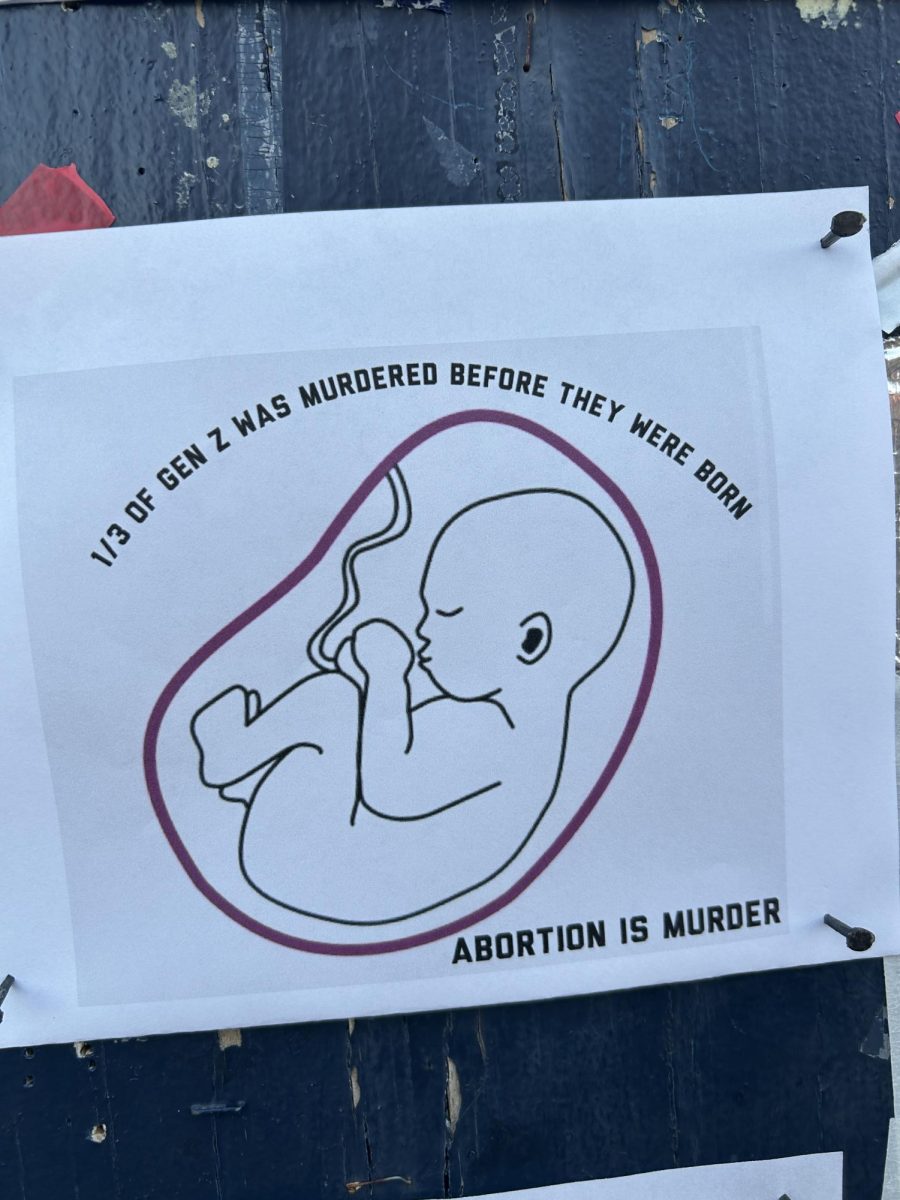
The posters are also adjoined with several Bible verses as well as graphics such as an unborn child, captioned “1 / 3 of Gen Z was murdered before they were born. Abortion is murder.”
“(We wanted to see) what people would let us put up, and we realized very quickly, no, they’re just going to tear down every single thing,” Thomas said. “Other groups can put whatever they want up there and no one ever messes with it. We’ve never touched anyone else’s stuff up there, but we have to routinely replace our stuff. Sometimes upwards to four to five times a day, as much as that sounds ridiculous to hear, we still do it because it’s become almost a principle thing to us.”
College Republicans sent The News a press release on Nov. 13, condemning campus censorship, emphasizing the importance of respectful debate and free expression.
The organization said it urges Murray State University to reaffirm its commitment to protecting First Amendment rights, and “that all students can express their views without fear of retaliation or vandalism.”
“Disagreement is healthy,” the release said. “Debate is necessary. But destroying or censoring what you don’t like is not free speech; it’s suppression. Murray State should be a campus where all students, regardless of political affiliation, feel safe and respected when they share their beliefs.”
Sidda Roche (they/them), Alliance president, expressed the same sentiment in an email sent to Ron Patterson, Murray State president, on Nov. 10.
“I am personally of the belief that everyone has a right to be here and make their voices heard no matter what political affiliation or religious belief,” Roche said.
But Roche also raised concerns, not so much about the posters and the bulletin board themselves, but the conduct surrounding them, reaching out on behalf of student concerns, specifically in regard to Murray State’s Turning Point USA.
Roche expresses to Patterson that this is more than one area on campus, more than a bulletin board.
“Turning Point USA has also consistently gone against regulations for how posters get put up in buildings and on campus,” Roche said. “I personally work in Faculty Hall and have had to take down posters that were posted in abundance, over fliers and without dean’s permission.”
Roche said Turning Point USA has tabled in the Curris Center so much they’re told some students will actively stay away from the building altogether because “members of this organization will walk in your way and follow you instead of staying with their table.”
“They also crowd up walkways in a way that I, in my several years here, have never seen another organization do,” Roche said.
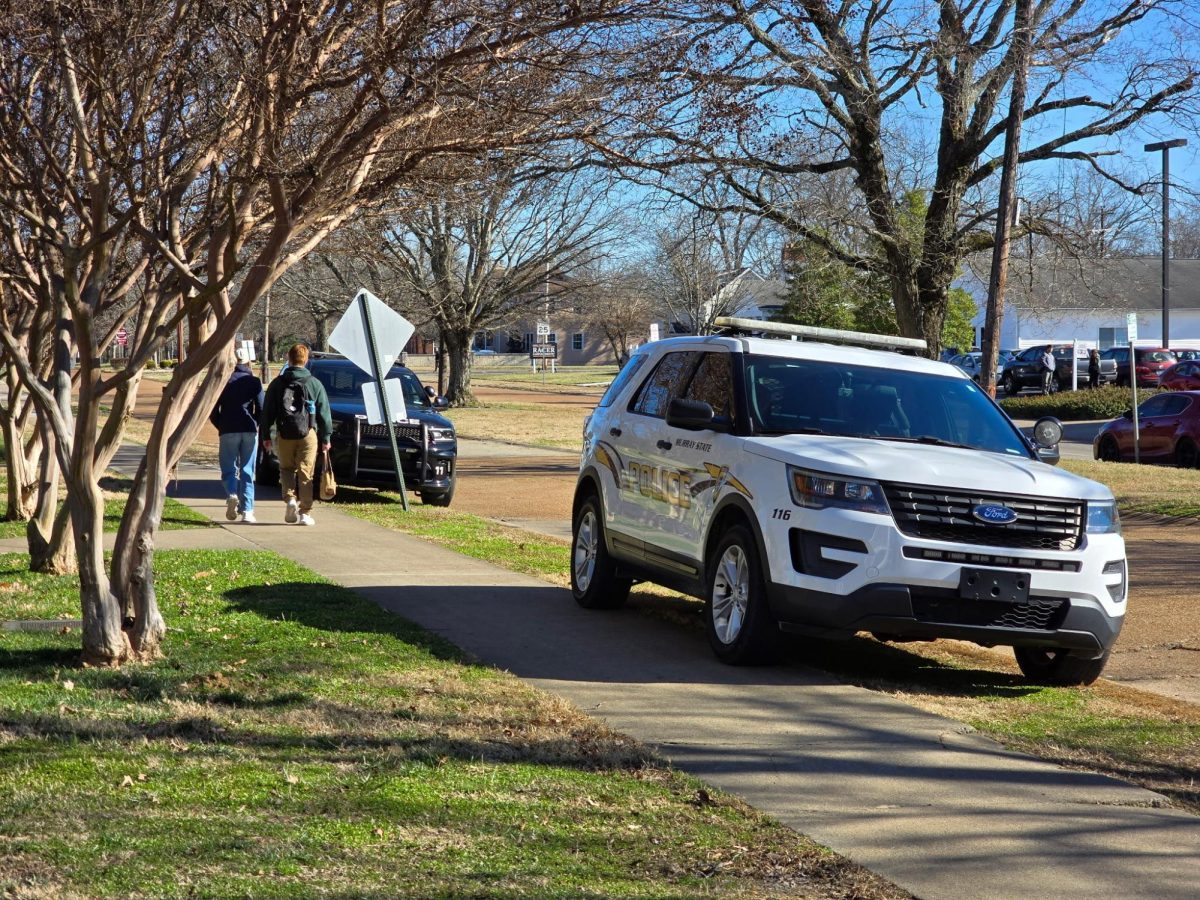
One student filed a police report for alleged harassment against some members of Turning Point who were “guarding” the materials posted to the board, Roche said.
“I don’t know what I am asking you to do about this, but I do know that it’s important to me that somebody in charge knows how uncomfortable a large portion of the student body is,” Roche said. “I, as a student organization leader, often see people messaging in our group chats about safe routes to take on campus to avoid these people, and how the political atmosphere on this campus this semester makes them feel unsafe.”
Patterson sent a campus-wide email from the address, President News, offering students the opportunity to take an Intellectual Freedom and Viewpoint Diversity Survey.
Questions ranged from inquiring if students are exposed to a variety of different ideological, political perspectives, and whether students feel free to express their ideas on campus and in the classroom.
“Your feedback is invaluable,” Patterson said.
The Murray State News contacted the harassed student for comment, but the student declined for safety reasons.
Student Government Association President Ali Khatib and College Democrats President Jocelyn Starks were asked to comment on this story, but did not respond by press time.